Approval is usually done by line managers, project managers or other responsible persons. They check the recorded working hours and activities for accuracy and completeness before releasing them for further processing.
More articles
- AI - Artificial intelligence
- Allocation of resources
- Approving and evaluating time and activities
- Attachments
- Capacity models
- Capacity planning
- ERP system
- Filter profiles
- Interfaces
- Linked resource and capacity planning
- Mobile app – Digital communication
- Operational planning
- Part-time
- Planners: architects, engineers and specialist planners
- Planning holidays and absences
- Production planning
- Project phases
- Projects
- Recording time and activities
- Resource consumption
- Resource Planning
- Resources
- Scoreboard – Digital communication
- Teams
- Temporary employees
- Time and performance recording
Approving and evaluating time and activities
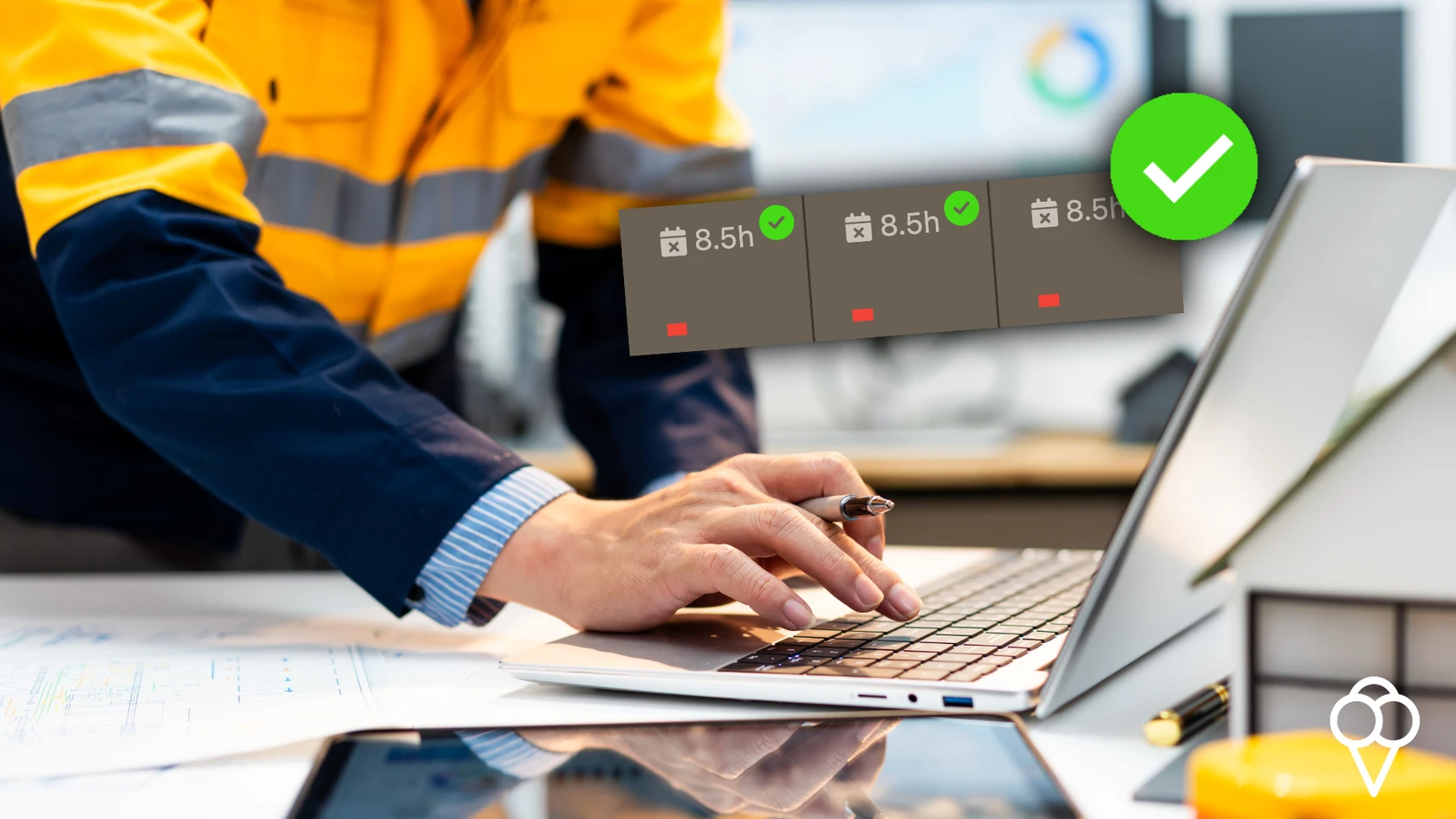
Digital time and activity recording is the basis for transparent documentation of working hours and services performed. But recording alone is not enough: only the subsequent review, approval and evaluation turn the collected data into a reliable basis for business organisation, billing and planning.
Especially in construction, where employees work on different projects and different working time rules may apply, handling this data in a structured way is particularly important.
Why do working hours and activities need to be checked?
Approving working hours and activities serves to check the recorded data for completeness, accuracy and plausibility. This makes it possible, for example, to ensure that working hours are documented correctly and assigned to the right projects, and that incorrect or missing entries are corrected in good time.
In construction in particular, compliance with statutory requirements and those of collective labour agreements (CLA) plays an important role. Depending on the industry and employment relationship, different rules may apply to working hours, travel time, overtime or expenses. Systematic recording and checking make it easier to take such requirements into account and to spot possible inconsistencies early on.
How does approving time and activities work?
During approval, the recorded working hours and activities are reviewed by a responsible person and then approved or sent back for correction. Besides working hours, travel time, expenses, material consumption and other project-related services can also be taken into account. A digital approval process makes this check considerably easier.
Being able to approve several entries at once saves a great deal of time. For example, you can approve the working hours of several employees for a given period in one go. Filters by department or entry type also help you keep track, even with a large number of entries.
If incorrect entries are rejected, it makes sense to notify the employees concerned directly. Ideally, the entries automatically reappear in their time recording so they can be corrected and resubmitted for approval.
How are recorded time and activities evaluated?
Once approved, the recorded data can be evaluated systematically. Two perspectives are particularly relevant here: employee-based and project-based evaluation.
Employee-based evaluation
Employee-based evaluation shows which working hours and activities individual employees have performed within a given period. Besides working hours, it can also take into account travel time, expenses and absences, for example.
A central overview makes it easier to trace the entries of different employees by day or week and to total up the hours worked.
Project-based evaluation
Project-based evaluation, on the other hand, focuses on the effort spent on individual construction projects. It shows how many working hours went into a project and what additional services or costs were incurred, for example for travel time, expenses or materials.
Tasks
Tasks allow an even more detailed evaluation: if recorded time and activities are assigned to specific tasks, you can see, for example, how many working hours went into individual work steps.
What role do working time and holiday balances play in the evaluation?
An important part of the evaluation is calculating working time and holiday balances. They show how many hours employees have worked compared with their target hours and how much holiday entitlement they have left.
To do this, the hours actually worked are compared with the target hours set by contract or by the company. This makes it possible to determine current working time balances as well as overtime and excess hours. Holiday entitlements, holidays already taken and carry-overs from the previous year also feed into the calculation.
Taking different working time models into account is particularly important.
With part-time work, for example, target hours may be spread across all working days or limited to certain days of the week. For balances to be calculated correctly, such differences must be taken into account, as must the applicable working time rules.
Digital balance overviews allow working hours and holiday entitlements to be evaluated on an ongoing basis. It is particularly helpful when both managers and employees can view their current working time, overtime and holiday balances at any time.
How is time recording data processed further?
The approved and evaluated data forms an important basis for other business processes. These include, in particular, payroll, project billing and future staff and resource planning.
There are various options for further processing:
Reports and data export: Recorded time and activities, as well as the balances calculated from them, can be summarised in weekly and monthly reports and exported, for example as PDF or CSV, for further processing.
Interfaces: Automatically transferring the recorded data to payroll or billing systems reduces manual input and potential transfer errors.
Using the data gained for future projects is particularly valuable. Comparing the hours actually worked and the services performed with the original plan reveals deviations and lets you estimate staff and resource requirements for upcoming construction projects more accurately.
What are the benefits of digital approval and evaluation?
Digital approval and evaluation of time and activities not only simplifies administrative processes, it also creates more transparency about how resources are used across the company.
The most important benefits include:
Less administrative effort: Several entries can be checked and approved at once, while automated processes make further processing easier.
More transparency: Working hours, activities, balances and project effort remain traceable in one central place.
Fewer errors: Digital review and approval processes and automated data transfers reduce manual work steps.
Better control: Deviations and inconsistencies can be spotted early.
Well-founded planning: Evaluating past and ongoing projects provides valuable experience for future assignments and capacity planning.
This turns the mere documentation of working hours and activities into an important tool for managing the business and planning resources more efficiently.
FAQs
Can several time entries be approved at once?
Yes, digital time recording systems can allow several entries to be approved at the same time. For example, the working hours of several employees for a given period can be checked and approved together.
What is the difference between employee-based and project-based time evaluation?
Employee-based evaluation shows which working hours and activities individual employees have performed. Project-based evaluation, on the other hand, shows how many hours and other services were spent on specific projects.
How are working time balances calculated for part-time work?
For part-time work, the hours actually worked are compared with the individually agreed target hours. It must be taken into account whether the reduced working time is spread across all working days or only certain days of the week.
Can time recording data be used for payroll?
Yes, approved time recording data can serve as the basis for payroll. Reports, data exports or interfaces can be used to pass the relevant information on to payroll accounting.